

July 9, 2026
From cotton mills to cutting-edge innovation, discover why North Carolina remains one of the most influential textile hubs in the world.
If textiles had a hometown in America, North Carolina would be at the top of the list.
Long before technical textiles, wearable technology, advanced composites, and sustainable materials became the future of the industry, North Carolina was laying its foundation. The state didn't just manufacture textiles—it helped build an industry that transformed communities, powered the American economy, and established the United States as a global leader in textile production.
More than a century later, that story is still unfolding.
Today, North Carolina remains the nation's leading textile-exporting state, shipping more than $1.4 billion in textile products to markets around the world each year. That success is a testament to an industry that has never stopped evolving. While the products may look different than they did decades ago, the spirit of innovation remains woven into the fabric of the state.
The Birth of a Manufacturing Powerhouse
North Carolina's textile story began in the late 1800s, when cotton mills started appearing across the Piedmont region. With access to raw materials, an expanding railroad network, and a growing workforce, the state quickly became an ideal location for textile manufacturing.
What started with a handful of mills soon grew into one of the largest textile manufacturing networks in the country.
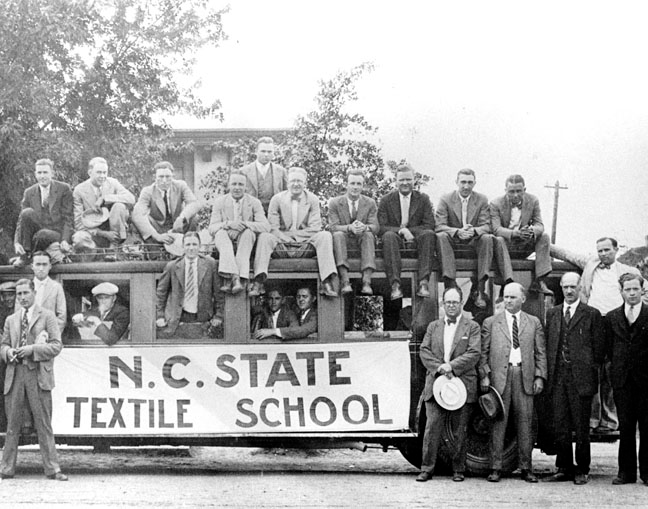
Throughout the early and mid-20th century, hundreds of mills operated across North Carolina, producing everything from cotton yarn and woven fabrics to hosiery, denim, upholstery, towels, and home furnishings. Entire towns were built around these facilities, with generations of families finding careers in an industry that shaped both their livelihoods and their communities.
For decades, North Carolina wasn't simply participating in the textile industry—it was helping define it.
More Than Mills — An Industry That Built Communities
The impact of textiles extended far beyond manufacturing.
Textile mills became the heartbeat of many North Carolina communities. They created jobs, supported local businesses, and helped establish a skilled workforce whose expertise was recognized throughout the industry.
For many families, textile manufacturing wasn't just a career—it became a tradition passed from one generation to the next.
That legacy continues today. Although the industry has transformed dramatically over the years, the craftsmanship, technical knowledge, and manufacturing expertise developed over decades still influence the way textiles are designed, engineered, and produced across the state.
Reinventing the Industry
Like many manufacturing sectors, textiles experienced significant changes as globalization reshaped production.
Rather than standing still, North Carolina chose to innovate.
Manufacturers invested in advanced technologies. Researchers explored new fibers and performance materials. Universities strengthened textile engineering programs. Entrepreneurs launched companies focused on solving tomorrow's challenges instead of yesterday's.
The result is one of the most advanced textile ecosystems in North America.
Today, North Carolina is recognized not only for traditional textile manufacturing but also for innovation in:
- Technical textiles
- Medical and healthcare textiles
- Protective fabrics
- Military and defense applications
- Smart and connected textiles
- Sustainable fibers and circular manufacturing
- Nonwovens
- Advanced composites
- Performance apparel
- Industrial textile solutions
This evolution has allowed North Carolina to remain globally competitive while continuing to attract investment, research, and manufacturing.
Why Innovation Still Starts Here
One of North Carolina's greatest strengths is the collaboration between industry, academia, and research.
World-class universities, research institutions, manufacturers, startups, and technology companies work together to move new ideas from the laboratory to commercial production.
That collaborative ecosystem accelerates innovation in ways few regions can match.
Whether it's developing next-generation medical textiles, advancing sustainable manufacturing practices, or engineering high-performance materials for aerospace and defense, many of tomorrow's textile breakthroughs are being developed right here in North Carolina.
Why Raleigh Is the Perfect Host
When Techtextil North America comes to Raleigh, it isn't simply choosing another convention city.
It's bringing the global textile community to one of the industry's most influential regions.
Within just a few hours of Raleigh are textile manufacturers, research laboratories, testing facilities, innovation centers, startups, and some of the country's leading textile education programs. That concentration of expertise creates an environment where ideas move quickly, partnerships form naturally, and innovation becomes reality.
For attendees, the experience extends far beyond the show floor.
The conversations started during educational sessions often continue over networking events. New supplier relationships become long-term partnerships. Research finds commercial applications. Students connect with industry leaders. Entrepreneurs discover collaborators. Manufacturers identify technologies that reshape production.
That is exactly what makes North Carolina such an important part of the industry's future.
Honoring the Past While Building What's Next
The textile industry has never been static.
It has continually adapted to new technologies, changing markets, evolving customer needs, and groundbreaking innovations.
North Carolina has evolved right alongside it.
The mills that once produced cotton fabrics laid the groundwork for an ecosystem that now develops advanced composites, medical textiles, sustainable materials, and intelligent fabrics.
History and innovation exist side by side.
That's what makes North Carolina unique.
Read More:
Wilson College of Textiles History | 125 Years of Textiles at NC State